Most hospital facebook ads fail before they’re even published, the objective is wrong, the audience is too broad. The creative is a stock photo of a stethoscope with the hospital name in the corner. Nobody stops scrolling for that.
We’ve audited the Facebook ad accounts of hospitals and clinics across Kolkata at Entrepot Media and the same problems appear repeatedly. Boosted posts with no campaign objective. Campaigns targeting “all of West Bengal” for a hospital with a five-kilometre patient catchment area. Lead forms that go to a website that doesn’t load properly on mobile. And a marketing team that concludes Facebook ads don’t work.
Why Facebook Is Different from Google for Healthcare
Google Ads captures patients who are actively searching. They have a symptom, they have a question, they’re typing it in. The intent is there.
Facebook is different when the person scrolling hasn’t decided they need a health check yet. They’re looking at their feed and an ad for a diabetes screening camp three kilometres from their house interrupts their scroll in a way that’s useful and timely. They didn’t know they were going to book a camp today. Now they are.
This is the awareness layer. And for hospitals trying to fill health camps, promote new departments, or reach families who should be getting preventive screenings, Facebook is the channel where demand gets created, not just captured.
What Facebook Actually Allows for Healthcare Advertising
This is where most hospital digital teams get stuck. Meta has strict policies on health-related advertising and they’re enforced.
What’s not allowed:
- Targeting users by specific health conditions.
- Custom audiences built from health data.
- Ads that imply knowledge of a user’s personal medical situation.
What is allowed:
- Location targeting down to a radius around the facility.
- Age and gender targeting.
- Interest categories covering general health and wellness, fitness, family health, parenting, and dozens of related areas.
- Lookalike audiences built from the hospital’s existing patient database, without any condition information.
- Engagement retargeting for people who’ve interacted with the page or watched videos.
Used properly, these tools reach a very specific local audience with a message relevant to their stage of life. A maternity package ad targeting women aged 22 to 35 within eight kilometres of the hospital. A cardiac check-up offers targeting men over 45 in the same zone. The targeting doesn’t require knowing their health status. It requires knowing their demographics and location.
What Actually Makes Facebook Ads for Hospitals Work
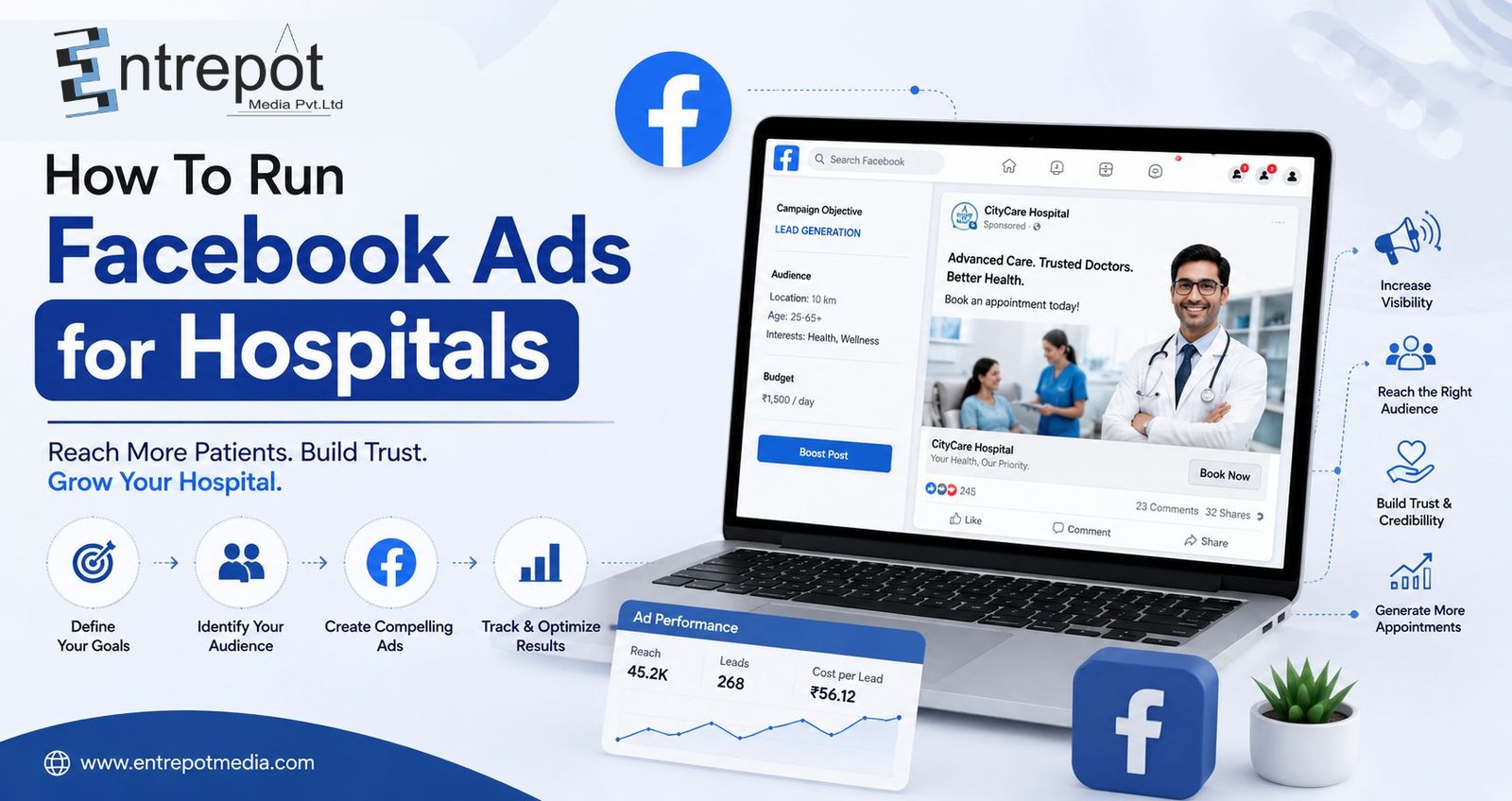
Get the objective right first: In Meta’s ad manager, the objective determines what the algorithm optimises for. Choosing “traffic” when the goal is appointment bookings means the algorithm finds people who click, not people who fill forms. The objective must match the intended action. Lead generation campaigns for appointments. Video views for awareness. Traffic only when the website itself is the conversion point, which for most hospitals it isn’t.
Target the radius, not the city: Patients for most hospital services don’t travel far. A ten-kilometre radius around the hospital catches the realistic patient pool. Targeting broader than that wastes budget on people who won’t travel and inflates cost per lead without improving results. We’ve reduced client cost-per-lead by forty percent simply by tightening geography.
Use lead ads, not link clicks: A Facebook lead ad keeps the patient on the platform. Pre-filled name and phone number from their profile. Two taps and they’ve submitted. A link to a website requires the site to load, the patient to find the form, fill it in, submit. We’ve seen three to four times more form completions from lead ads compared to traffic-to-website campaigns for the same budget.
Make creative that stops the scroll: Two seconds. That’s the window. A doctor speaking directly to camera about the most common question patients ask before a procedure. A specific offer with a clear deadline. A real patient story. Any of these perform better than a clinical stock image with a logo. The creative is not decoration. It’s the first conversion point.
Retarget warm audiences: Someone watched 75 percent of a video about joint replacement and didn’t contact the hospital. That person is far more likely to convert than a cold audience. A retargeting ad showing them a patient testimonial or a free consultation offer costs a fraction of cold targeting and converts at a higher rate. This is consistently the highest-ROI segment in our healthcare campaigns.
Before Spending a Rupee
Verify the Meta Business account. An unverified account gets ad delivery restricted without warning and the first the client finds out is when the campaign goes live and nothing runs.
Install the Meta Pixel on the website before the campaign goes live. Without it, there’s no way to track what happens after a click. Optimisation without pixel data is guesswork.
Run at least three creative variations from day one. One will outperform the others. After three to four days, consolidate budget into the winner.
FAQs
Can Facebook ads target patients with specific health conditions?
No. Meta prohibits this. Location, age, gender, general health interests, and lookalike audiences are what’s available. They’re sufficient when used with precise geography and relevant messaging.
What budget works for a hospital just starting?
Fifteen thousand rupees per month is a realistic minimum. Below that, the dataset is too small to optimise meaningfully. The second month almost always outperforms the first as the algorithm learns.
How long until results show?
First leads typically come within the first week on a properly structured lead generation campaign. Cost per lead improves through weeks two to four as the campaign optimises. Month two is usually when the real picture emerges.
The Hospital That Says “Facebook Doesn’t Work”
Many businesses run boosted posts, target everyone in the state, and use stock photos with their logo. They get clicks, spend the budget, but generate few or no appointments. As a result, they conclude that the platform failed.
The platform did not fail. The campaign did.
Entrepot Media builds and manages Facebook ad campaigns for hospitals, clinics, and medical practices. Campaign strategy, creative, targeting, lead generation, and monthly performance reporting. We make it possible to turn Facebook from a cost into a patient acquisition channel. If ads have been run before and produced nothing useful, the structure is what needs looking at.
Read More: